

For two decades, France’s electricity question was framed in terms of generation: did we have enough power, at what price, with what carbon footprint?
That question is now largely settled. France produces abundant, low-carbon and competitive electricity — enough to export a significant share of it.
The factor that now decides where a factory, a data center or an electrolyser is built is no longer the energy available, but the grid available: the ability to connect — quickly and at a controlled cost — to the transmission network.
This shift changes the very nature of project risk. It deserves a closer look.
Figure 1 — From a generation constraint to a transmission constraint: the nature of project risk changes.
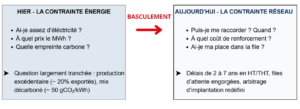
Figure 1 — From a generation constraint to a transmission constraint: the nature of project risk changes.
A French paradox: energy is abundant, connection is scarce
For the second year running, French electricity output has hit record levels. A senior data-center operator recently summed up the difficulty: pulling a little more than a kilometre of cable can take three years. The grid operator itself puts it bluntly — France’s ability to produce the electricity required is not in question; it is the connection that is blocking projects.
Two notions that public debate constantly conflates must be distinguished. Energy availability refers to the supply–demand balance and the adequacy of the generation fleet — an area where France is comfortable. Grid availability refers to the physical transmission capacity and to the connection queue. That is where the constraint now lies.
An unprecedented wave of demand
The change of scale is abrupt. At the end of 2024, the grid operator counted around forty data-center projects for about 5 GW. By May 2026, it had already reserved nearly 18 GW of capacity for some eighty projects.
But a large part of this pipeline is speculative. Data centers connected two to three years ago consume, on average, only 20% of the capacity they had requested. Many projects thus reserve capacity without using it, clogging the queues to the detriment of solid applications. The real challenge is therefore not to produce more, but to sort: to separate genuine projects from phantom reservations.
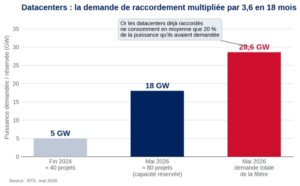
Figure 2 — The surge in data centre connection requests, and the speculative share it conceals.
The grid operator’s response
The response is playing out on three fronts.
First, investment. The ten-year network development plan (SDDR) commits on the order of €100 billion over fifteen years, to 2040. About a third goes to renewing an ageing network — 23,500 km of lines, 85,000 pylons; more than half to connecting new low-carbon generation, including the EPR2 reactors and offshore wind; the rest to reinforcing the 400 kV backbone. Set against its neighbours — more than €250 billion announced by Germany by 2037, around €150 billion by the United Kingdom by 2035 — France’s effort is real, but cut to the bone.
Figure 3 — The breakdown of the investment plan (SDDR).
Second, sorting projects. A new “first ready, first served” access rule, together with maturity criteria, now determines priority — favouring the projects that are actually being built.
Figure 4 — The change in grid-access rules and the maturity criteria that now determine priority.
Finally, targeted acceleration. A “fast-track” procedure allows rapid connection to the extra-high-voltage grid for a handful of very-high-power sites — 700 MW to 2 GW — pre-identified by the State. The first contract was signed in early 2026 for a site of up to 1,400 MW.
This transformation is financed through the network usage tariff (TURPE), already raised. It will translate into a modest but lasting increase in transmission costs.
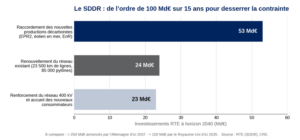
Figure 3 — Breakdown of RTE’s investment plan to 2040 (orders of magnitude).
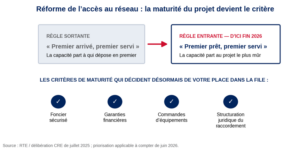
Figure 4 — The change in grid access rules and the maturity criteria that now determine priority.
What this changes for project developers
For a project owner, the consequence is direct: the electrical connection becomes the first location criterion — ahead of land and ahead of connectivity.
Geography is being reshuffled. Historically sought-after areas — the Paris region, the Marseille arc — are saturating, while the Hauts-de-France (around Gravelines and Dunkirk), the Grand Est and the Rhône valley are gaining appeal, precisely because the grid there can absorb new load without years of waiting.
Figure 5 — The location map is being redrawn: the grid, more than the land, now decides the site.
The “first ready” logic also requires structuring the project very early: securing the land, assembling the guarantees, and locking in the technical and financial connection offer from the outset. The rules for transferring these access rights have, moreover, been tightened. A poorly prepared project no longer merely loses time: it loses its place in the queue.
Above all, the economic trade-off is shifting. A connection in two years rather than seven, or a grid-reinforcement cost overrun, now weighs more heavily on a project’s profitability than the price of the megawatt-hour. Value now hinges on the certainty of connection cost and lead time — a field that falls squarely within cost management and project due diligence, upstream of any investment decision.
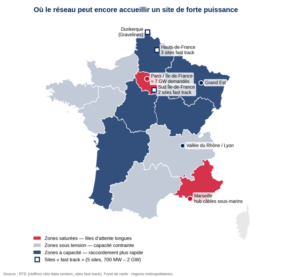
Figure 5 — The siting map is being redrawn: the grid, more than land, now decides the site.
A structural advantage to be converted
France holds a rare hand: low-carbon, competitive and surplus electricity, a first-rate industrial argument in the artificial-intelligence race — where several neighbours are held back by the energy constraint itself.
But this advantage is conditional. It assumes the grid keeps pace and that project screening is conducted rigorously. The Irish example — data centers absorbing more than a fifth of national electricity, and the prospect of a moratorium — is a reminder of what unchecked growth costs.
For public and private decision-makers alike, the discipline is clear: treat grid availability as a first-order project risk, factor it in from the earliest studies, and put a value on execution certainty. That is now where projects are won — or lost.
RLB | SQA’s contribution
We work at the intersection of infrastructure, where capacity is built, and industrial and data-center projects, where demand arises. We identify these zones upstream: capacity created by the grid’s planned investments, freed up by industrial restructuring, and returned by the coming purge of phantom reservations.
We then quantify what this is worth — full connection cost, the value of time saved, risks to provision for — in order to arbitrate a site before, not after, the location decision.
Without selling equipment, energy or works: this is the condition for a figure to be credible before an investment committee.
Matthieu LAMY, Partner — RLB | SQA France
Sources: RTE; Commission de régulation de l’énergie; France Datacenter / EY-Parthenon; Observatoire de l’industrie électrique. Data current as of June–July 2026. Visuals: RLB France.